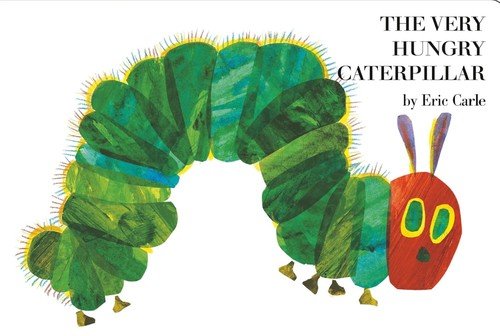
I must have read The Very Hungry Caterpillar a few hundred times by now, first as a kid and later out loud to the small people in my life. So this Very Hungry Caterpillar review is not a cold, first-read opinion. It’s what I’ve noticed after years of turning those little holey pages, and why I still think it belongs on every toddler’s shelf.
The Very Hungry Caterpillar at a Glance
| Book | The Very Hungry Caterpillar |
| Author & illustrator | Eric Carle |
| Genre | Picture book |
| First published | 1969 |
| Pages | 26 (board book) |
| Best for | Ages 1 to 5, bedtime, early counting |
| My rating | ★★★★★ 5/5 |
In This Review
- What is it about?
- What I liked
- What could be better
- Who should read it
- Books like it
- Final verdict
- FAQs
What Is The Very Hungry Caterpillar About? (No Spoilers… Well, Almost)
A tiny egg sits on a leaf. On Sunday morning a caterpillar pops out, and he is starving. From Monday to Friday he works through a growing pile of fruit, one more piece each day, and each fruit has a real hole punched through it. Then Saturday happens, and he eats far too much of everything.
He feels awful, as you would. He settles down with something green and simple, builds himself a little house, and waits. I won’t pretend the ending is a surprise to anyone over the age of four, but to a two-year-old seeing it for the first time, it is pure magic.
About the Author, Eric Carle
Eric Carle wrote and illustrated more than 70 books before he passed away in 2021. He made his pictures from hand-painted tissue paper, cut and layered like collage, which is why the colours on every page look so bright and a bit messy in the best way. If your child likes this one, Brown Bear, Brown Bear, What Do You See? (which he illustrated) is the natural next step.
What I Liked
- The holes. Kids push their fingers through them every single time. It turns reading into something they do with their hands, not just their ears.
- It teaches without preaching. Counting from one to five, the days of the week, a bit of food talk, and the idea that things change. None of it feels like a lesson.
- The pages get bigger. Each fruit page is a little wider than the last, so the book physically grows as the caterpillar eats. I didn’t notice this as a kid. My niece noticed it on day one.
- That last page. Big, bright, and worth the wait. It’s the page that gets the “again!” request.
What Could Be Better
- The science is a little off. Butterflies come out of a chrysalis, not a cocoon. Carle knew this and kept the word because it read better. If you have a curious kid, it’s an easy thing to explain.
- The regular paper edition tears. Those cut-out pages don’t survive toddler hands for long. Buy the board book.
Who Should Read The Very Hungry Caterpillar?
- You’ll love it if you’re reading with a toddler or preschooler and want something short, bright and fun to repeat.
- Teachers: it works really well for lessons on counting, days of the week, healthy food and life cycles.
- Maybe skip it if your child is already 6 or 7 and wants a real story with chapters. They’ve probably outgrown it.
Books Like The Very Hungry Caterpillar
- Brown Bear, Brown Bear, What Do You See? by Bill Martin Jr., illustrated by Eric Carle, for the same bold art and a rhythm kids learn by heart
- The Very Busy Spider by Eric Carle, which has a raised web you can trace with a finger
- Dear Zoo by Rod Campbell, another lift-and-look book toddlers can’t leave alone
Final Verdict: Is The Very Hungry Caterpillar Worth Reading?
My rating: ★★★★★ 5/5
Yes, without a doubt. It’s more than 50 years old and it still holds a toddler’s attention better than most new picture books I’ve tried. It’s short enough for bedtime, simple enough to read on autopilot, and fun enough that kids keep coming back to it. If you only buy one Eric Carle book, make it The Very Hungry Caterpillar, and get the board book version.
The Very Hungry Caterpillar FAQs
It works best for children aged about 1 to 5. Babies enjoy the colours and the holes, and preschoolers like counting the food and guessing what happens next.
About three to five minutes out loud. Longer if your child stops to poke every hole, which they will.
Counting from one to five, the days of the week, names of fruits and foods, and a simple idea of how a caterpillar turns into a butterfly.
Real butterflies form a chrysalis. Eric Carle used the word cocoon on purpose because he felt it sounded better in the story.